
Top 5 Lockout Tagout Devices Manufacturers in China: 2026 Edition——Lockout Tagout Program Upgrade 2026: Why OSHA's Modernization Means It's Time to Act

1. Is It Time to Upgrade Your Lockout Tagout Program?
If your facility still relies on paper-based lockout/tagout procedures, handwritten logs, and manual key tracking, you are not alone — but you may be falling behind. Lockout/tagout (LOTO) remains one of the most frequently cited OSHA standards, with 2,177 violations recorded in fiscal year 2025 alone, ranking it the fourth most cited standard nationwide. Yet despite decades of enforcement, only about one in ten employers have a fully functioning, compliant lockout program.
The bigger question is no longer whether your program meets today's requirements — but whether it will meet tomorrow's. With OSHA preparing to modernize the LOTO standard for the first time since 1989, and digital technologies transforming how industrial safety is managed, the time to evaluate your lockout program is now.
The Regulatory Landscape Is Changing
For the first time in nearly four decades, OSHA is moving to update the lockout/tagout standard (29 CFR 1910.147). According to the federal government's 2026 Regulatory Agenda, OSHA plans to publish a proposed rule by November 2026 that would modernize the standard, with a particular focus on allowing computer-based controls for hazardous energy.
The existing standard, promulgated in 1989, specifically prohibits the use of push buttons, selector switches, and other control-circuit devices for energy isolation. But as the Department of Labor notes, "recent technological advances may have resulted in safety improvements to control-circuit-type devices" — and "modernizing the standard to better align with current technologies may improve safety effectiveness and, indirectly, potentially increase operation efficiency".
This regulatory shift reflects a broader recognition: the industrial landscape has changed dramatically since 1989, and lockout programs must evolve accordingly.
2. Why Traditional Lockout Programs Are Falling Short
Paper-based LOTO programs face several inherent challenges that digital solutions are increasingly designed to address:
Outdated documentation. Written procedures quickly become obsolete as equipment changes, personnel turnover, and processes evolve. Without a centralized method to reference and update procedures, foundational knowledge can be lost, impacting both safety and business continuity.
The aging workforce and knowledge gap. Experienced workers carry decades of institutional knowledge about lockout procedures. As this generation retires, studies estimate that lack of knowledge transfer could cost large businesses $47 million per year. A recent survey found that 57% of baby boomers had shared less than half of the knowledge needed for their successors to perform their jobs.
Inconsistent training and execution. Generic lockout training is not enough — workers need machine-specific procedures. Yet many organizations struggle to maintain and deliver training that reflects current equipment configurations and isolation points.
Limited visibility and accountability. Without real-time visibility into lockout activities across multiple facilities, supervisors cannot verify compliance, track active lockouts, or ensure proper shift handoffs.
3. What Modernization Looks Like
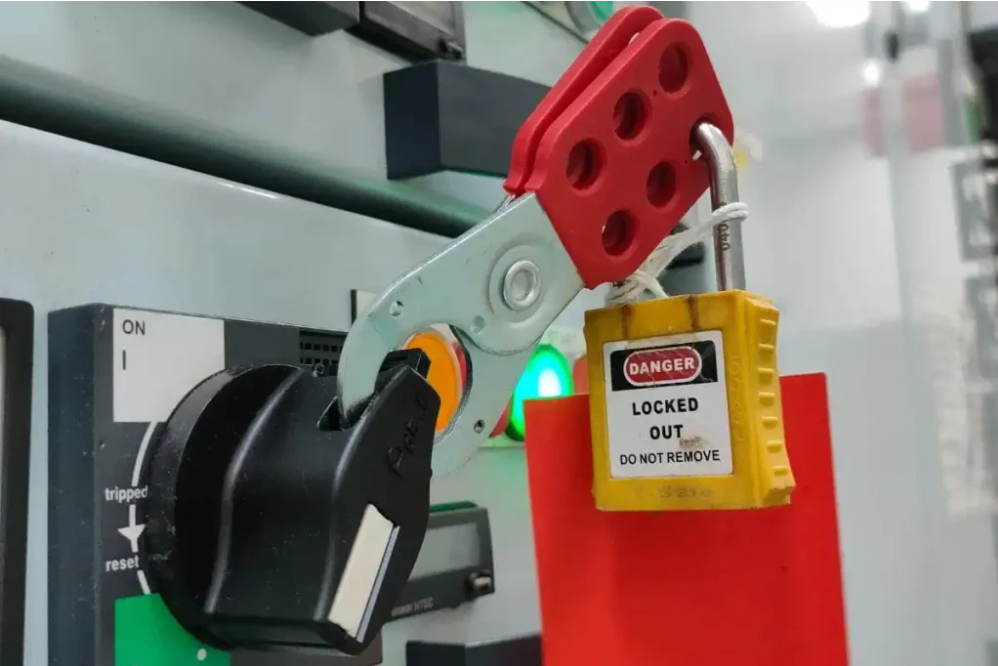
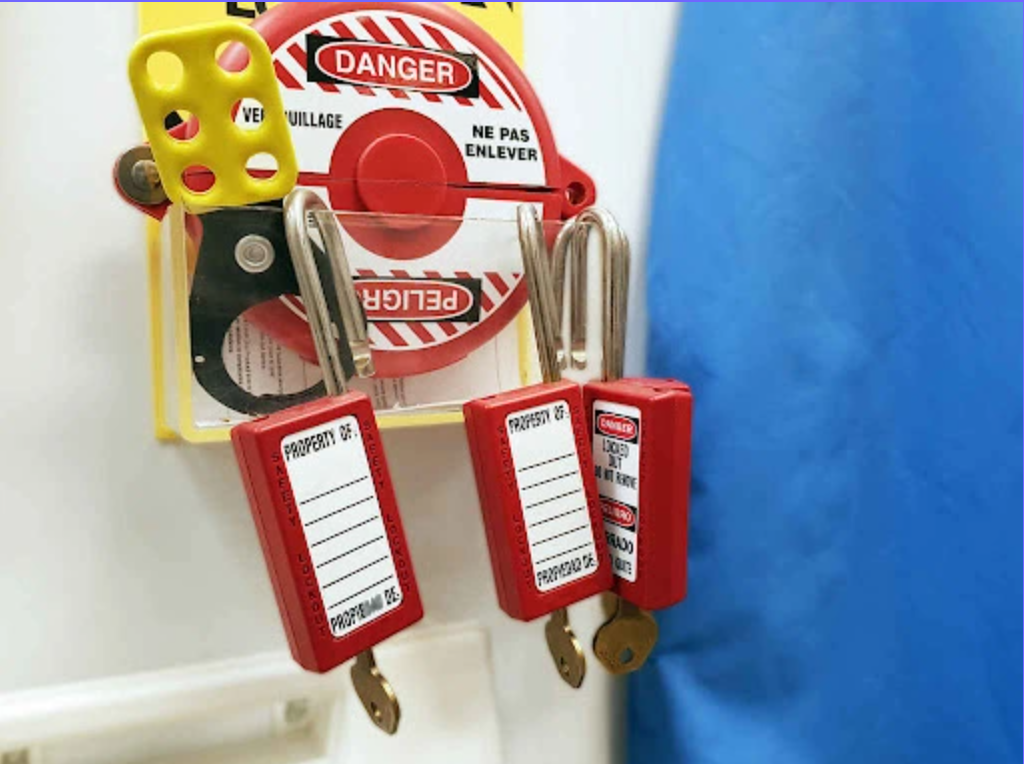
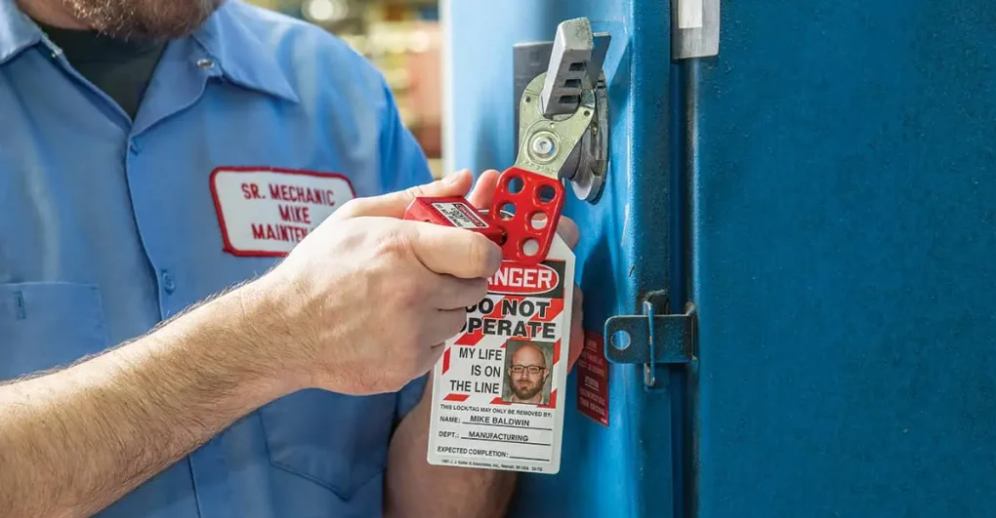
Upgrading your LOTO program doesn't mean abandoning physical locks — and it shouldn't. Connected lockout systems combine traditional locks and tags with digital oversight tools such as Bluetooth-enabled padlocks, cloud dashboards, and mobile apps. The goal is not replacement but enhancement: the digital layer adds efficiency and visibility while the physical lock remains the foundation of worker safety.
Digitized procedures. Instead of maintaining binders of paper procedures that quickly become outdated, digital platforms allow workers to access equipment-specific procedures on mobile devices, with real-time updates that ensure everyone works from the same version.
Real-time tracking. With digital logging, supervisors can instantly see which locks are in place, which machines are safe to service, and who is responsible — eliminating delays caused by paperwork or in-person checks.
Audit-ready records. Digital systems automatically generate comprehensive audit trails of lockout activities, training certifications, and procedure updates — making OSHA inspections far less stressful.
IoT and AI integration. IoT sensors can continuously monitor equipment status and adherence to safety protocols. Over time, AI can analyze lockout trends to spot inefficiencies and alert supervisors when certain machines require frequent intervention.
4. The Business Case for Upgrading
The benefits of modernizing your LOTO program extend well beyond regulatory compliance:
Cost savings. Digital LOTO automation can reduce total program costs by two-thirds or more through eliminated paper workflows, automated compliance tracking, and streamlined training documentation.
Reduced downtime. Digital lockout programs minimize production delays associated with machine downtime and safety protocols by automating workflows and providing faster access to procedures.
Fewer incidents. OSHA estimates that proper LOTO could prevent 120 deaths and 50,000 injuries annually. Each serious injury costs approximately $43,000, and each fatality averages $1.46 million.
Avoiding penalties. OSHA penalties for serious LOTO violations average $42,000, with repeat violations reaching $150,000 or more. Proactive modernization is far less expensive than reactive penalties.
5. How to Assess Your Program
Before making any changes, start with a thorough assessment of your current program. Key questions to ask include:
-Are all energy sources identified for each piece of equipment?
-Are your written procedures equipment-specific and up to date?
-Do you have documented training records for all authorized, affected, and other employees?
-Are you conducting periodic inspections at least annually?
-Can you easily demonstrate compliance during an OSHA inspection?
-Do you have real-time visibility into lockout activities across all facilities?
-Are you prepared for OSHA's upcoming regulatory changes?
6. Getting Started
If your assessment reveals gaps — and for most organizations, it will — here are practical steps to begin upgrading:
1). Assemble a cross-functional team including safety, operations, IT, and maintenance to guide the transition.
2). Audit your equipment and procedures — create a master list of every piece of equipment that requires lockout, and review existing procedures for accuracy and completeness.
3). Evaluate digital LOTO solutions that align with your operational needs, facility size, and existing systems.
4). Start with a pilot program before rolling out facility-wide, and involve IT early to address cybersecurity and connectivity considerations.
5). Train workers not only on the digital steps but also on the continued importance of physically applying the lock.
The lockout/tagout standard has remained largely unchanged since 1989, but that is about to change. OSHA's upcoming modernization proposal signals a clear direction: the future of hazardous energy control will embrace computer-based technologies while preserving the physical safeguards that have protected workers for decades.
Organizations that wait for the final rule to take effect before taking action will find themselves playing catch-up. Those that begin the upgrade process now — assessing their programs, exploring digital solutions, and preparing their workforce — will be positioned not only for compliance but for improved safety, efficiency, and cost savings.
The question isn't whether to upgrade your lockout tagout program. It's whether you'll do it on your timeline — or on OSHA's.

Lita Lock, a China based manufacturer, since 2017, active in manufacturing safety padlocks, electrical lockout, valve lockout, lockout station, tags and other lockout & tagout for global partners.
To help customers compliance with OSHA Standard 29 CFR 1910.147, Lita Lock does not only offer design, production and final assembly, but also a complete lockout & tagout solution for various industries.
Lita Lock pursues the competitiveness on creative, quality control, technology and sustainable development. As the founder of Lita Lock, Iris Chen says: “Many things have changed, but one thing that has not—our original intention to start businesses: keeping workers safe.” Together, we make work environments safer.
Sales Manager: Iris Chen
Email: iris@litalock.com
Whatsapp: + 86 195 1976 7209
#safetylockout #OSHAstandard29CFR1910.147 #industriallockoutdevices #lockouttagout #LOTO #safetypadlocks #Lockout #Gascylindervalvelockout #cylinderlockoutdevice #gascylindersafetylock #Hazardousenergycontrol #LOTOcompliance2026 #Digitallockouttagout #OSHA1910.147modernization2026 #Lockouttagoutprogramupgrade