
Circuit Breaker Lockout Applications | Ensuring Comprehensive Electrical Isolation
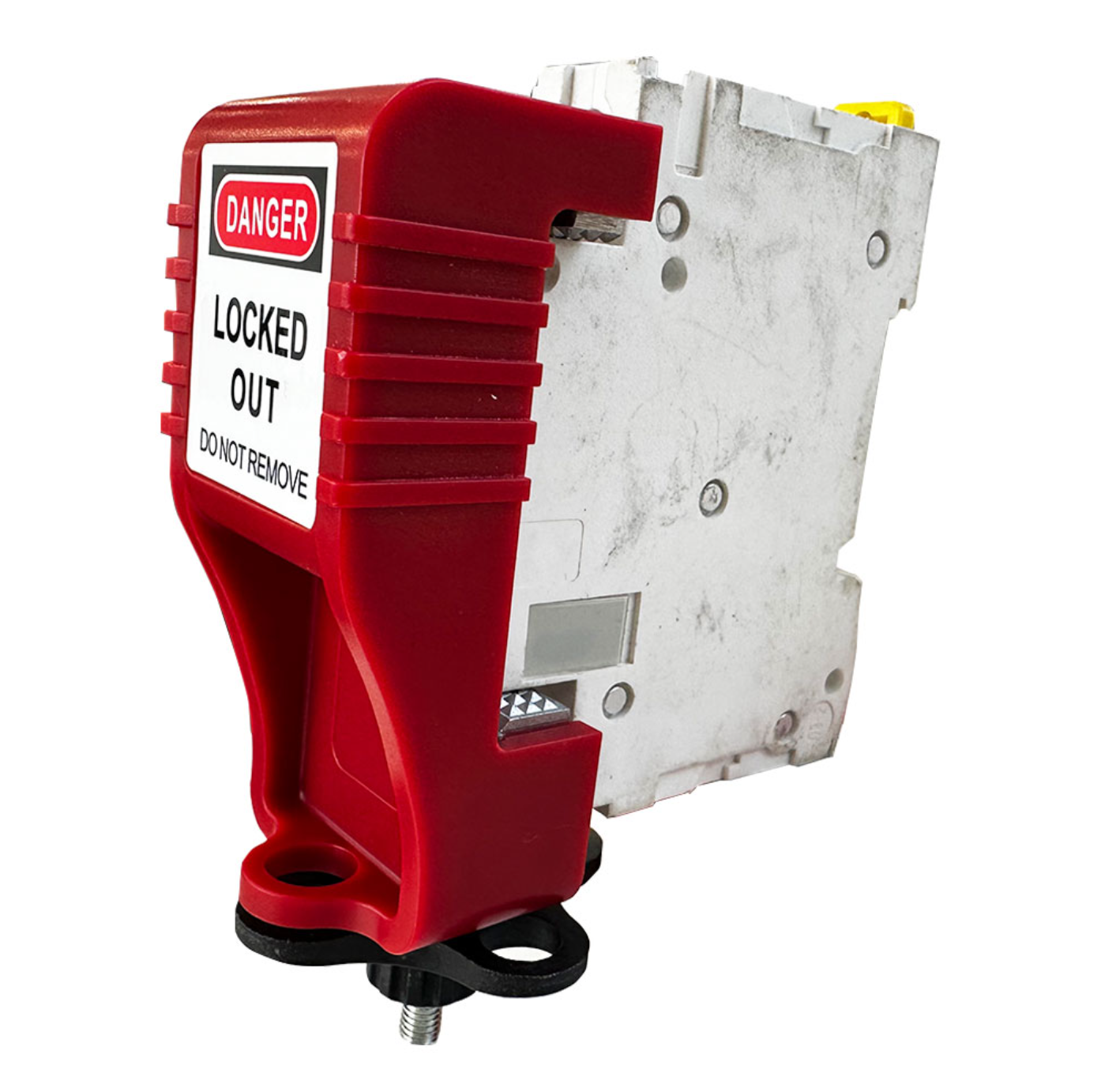
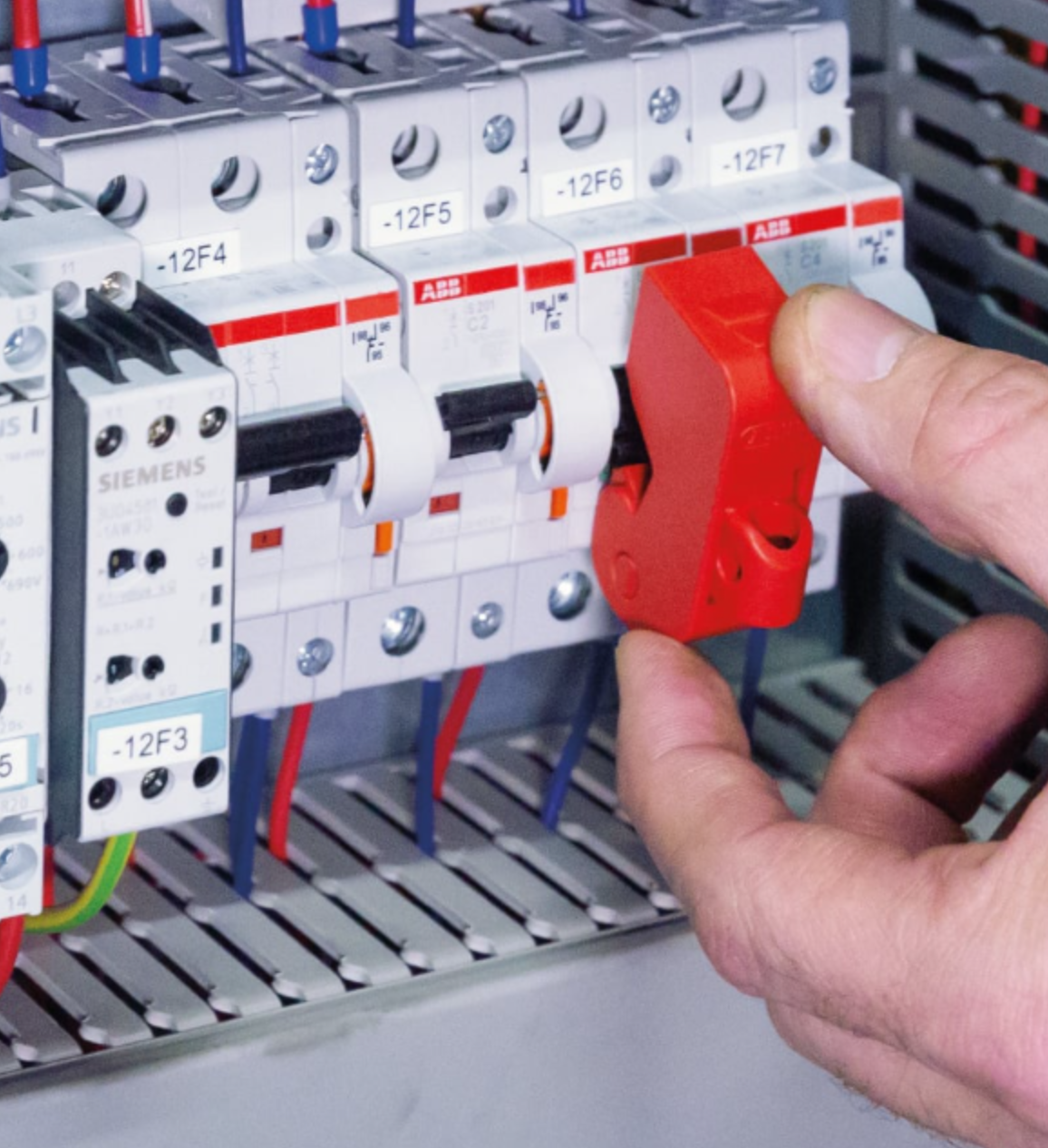
Meta Description: Discover the specific applications of different circuit breaker lockout devices. From miniature breakers to heavy industrial switchgear, learn how to select and apply the right LOTO device for safe maintenance.
In the realm of electrical safety, Lockout/Tagout (LOTO) is the critical procedure used to ensure that equipment is completely de-energized during maintenance or repair. For electricians and maintenance technicians, the circuit breaker is often the primary point of isolation. However, because circuit breakers come in various sizes, pole configurations, and designs, a "one-size-fits-all" approach to lockout simply doesn't work .
Applying the wrong device can lead to incomplete energy isolation, creating severe risks of electric shock, arc flash, or equipment damage . This guide explores the specific applications of various circuit breaker lockout devices, helping you choose the right solution for your electrical infrastructure.
Why Circuit Breaker Lockout is Non-Negotiable
A circuit breaker lock is a LOTO device that physically prevents the breaker handle from being moved from the "OFF" position to the "ON" position . This physical barrier is mandated by standards like OSHA 29 CFR 1910.147 to prevent unexpected energization .
Without a proper lockout device, a simple accidental bump or an unauthorized attempt to restore power can have fatal consequences while a worker is exposed to live parts downstream.
Application Guide: Matching the Device to the Breaker
To effectively lock out a breaker, you must match the lockout device to the specific application. Here are the most common types and their specific use cases.
1. Miniature Circuit Breaker (MCB) Lockouts
Application: Single-pole and small multi-pole breakers commonly found in lighting panels, control cabinets, and commercial electrical panels .
MCBs are compact and often feature a small hole in the toggle switch. Pin lockout devices are specifically designed for these breakers.
How to Apply: After turning the breaker off, the lockout device is positioned so its pins align with the small holes in the breaker casing or toggle. The device is then secured, and a padlock is attached to the designated hole .
Application Tip: Always verify if the toggle requires a "Pin-In" or "Pin-Out" style device to ensure a secure fit .
2. Molded Case Circuit Breaker (MCCB) Lockouts
Application: Larger breakers handling higher current ratings (typically above 100A) in industrial distribution panels and heavy machinery .
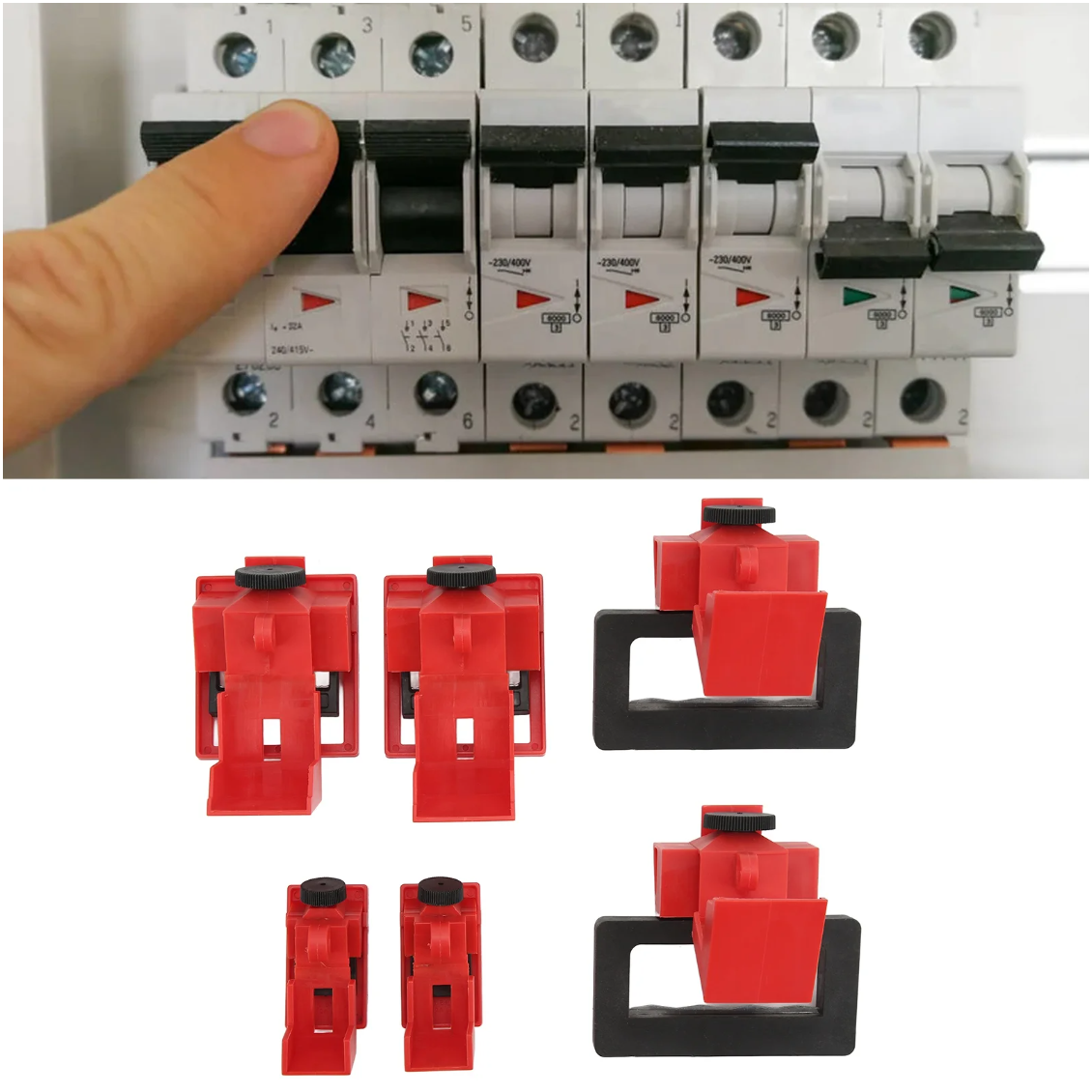
These breakers often have larger toggles that lack lockout holes. Clamp-on or Universal breaker lockouts are the standard solution here .
How to Apply: The device is placed over the breaker toggle. A thumbscrew or clamping mechanism is then tightened to secure the device firmly to the switch. Once tightened, a lid is closed, and a padlock is inserted to prevent removal .
Application Tip: Because these devices rely on friction, ensure the thumbscrew is tightened sufficiently to prevent slipping, especially in high-vibration environments .
3. Multi-Pole and Tie-Bar Lockouts
Application: Two-, three-, or four-pole breakers where the handles are connected by a tie bar to ensure all phases are switched simultaneously.
Using a single-pole device on a multi-pole breaker is dangerous, as one handle might appear locked while the others are not. Tie-bar lockouts are designed to fit under or over the connecting bar, immobilizing the entire assembly .
How to Apply: The device is positioned under the tie bar or over the group of switches. A rotating wheel or sliding mechanism secures the device, and a padlock locks it all in place .
4. Permanently Mounted Systems
Application: Mine sites, power stations, and heavy industrial facilities where specific breakers are locked out frequently .
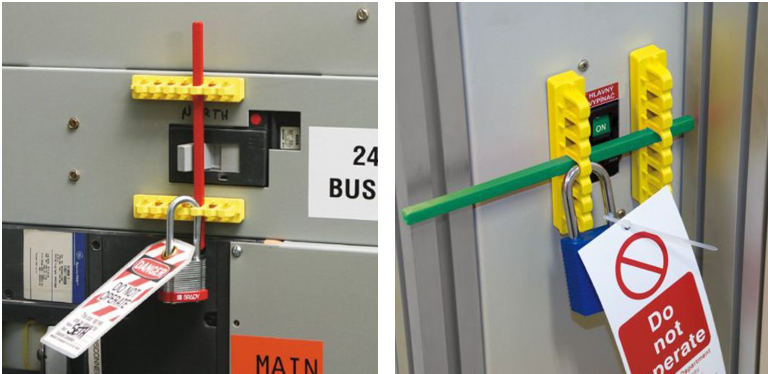
These are permanent installations mounted to the breaker panel cover. They consist of a rail system and individual arms for each breaker .
How to Apply: Because the hardware is permanently attached, workers only need to bring their personal padlock. When maintenance is required, they simply move the arm into the locked position over the breaker and apply their lock .
Application Tip: This system is ideal for group isolation scenarios, as multiple workers can apply their locks to a hasp connected to the system .
Common Industrial Applications and Case Studies
Understanding the theory is one thing; seeing it in action is another. Here is how different industries apply circuit breaker lockout procedures:
Wind Turbine Maintenance: In offshore and onshore wind farms, technicians use universal mini circuit breaker lockout devices to secure breakers inside the turbine cabinets. Due to the remote location and multiple technicians working on a single turbine, group lockout kits containing hasps and personalized padlocks are essential to ensure the turbine cannot be reactivated until all personnel have cleared .
Mining and Mineral Processing: During a mine shutdown, high-level maintenance occurs across the site. Permanently mounted breaker lockout systems are popular here because they are always ready for use. This speeds up the isolation process for high-voltage switchgear, allowing multiple contractors to place their locks on isolated breakers simultaneously, which is crucial for maintaining tight shutdown schedules .
Commercial Building Retrofits: When upgrading HVAC systems or installing new lighting, electricians often work in live panels. Clamp-on and snap-on lockouts provide a quick and effective way to isolate specific circuits without needing to lock out the entire building, ensuring that office spaces remain powered while specific circuits are de-energized for work .
Step-by-Step: How to Lock Out a Circuit breaker Safely
Regardless of the device type, the application procedure generally follows these steps to ensure a "Zero Energy State" :
Prepare for Shutdown: Identify all energy sources and the specific breaker to be locked out.
Shut Down the Equipment: Turn the equipment off using its normal stop procedure, then switch the circuit breaker to the "OFF" position .
Isolate the Energy: Apply the appropriate circuit breaker lockout device to the breaker toggle .
For MCBs: Insert pins into the toggle holes.
For MCCBs: Tighten the clamp mechanism.
Lock and Tag: Attach your personal padlock to the lockout device. Fill out a danger tag and attach it .
Verify Zero Energy: This is the most critical step. Use a properly rated voltage tester to verify that there is no power on the circuit you intend to work on. Always test the tester on a known live source first, then test the target circuit, then test the tester again .
Common Mistakes to Avoid
Even with the right equipment, improper application can lead to accidents. A frequent error is not fully engaging the locking mechanism. For instance, if a thumbscrew clamp-on device is not tightened completely, a vibration or a bump could loosen it, allowing the breaker to be turned on .
Another critical mistake is skipping the voltage verification step. Assuming the breaker is off because the handle is down is not enough. Faulty wiring, incorrect panel labeling, or back-feeding can mean the circuit is still live even with the breaker in the off position .
Conclusion
The application of circuit breaker lockout devices is a specialized skill within the broader LOTO procedure. By understanding the specific type of breaker you are working with—whether it is a single MCB in a control panel or a large MCCB in an industrial switchgear line—you can select the correct lockout device. This ensures that the "lock" in Lockout/Tagout provides absolute assurance, protecting workers and ensuring compliance with safety regulations.
Optimization Notes for the Blog Editor:
Internal Linking: Link "Lockout/Tagout (LOTO)" to your main LOTO category page. Link "group lockout kits" or "hasps" to your product pages for those items.
Call to Action: At the bottom of the post, add a section with buttons like "Shop Circuit Breaker Lockouts" or "Download our Breaker Lock Selection Guide."
Images: Insert high-quality images or GIFs showing the application of each type of device mentioned (MCB pin lock, Clamp-on, Tie-bar, etc.). Visuals are critical for this topic.

Lita Lock, a China based manufacturer, since 2017, active in manufacturing safety padlocks, electrical lockout, valve lockout, lockout station, tags and other lockout & tagout for global partners.
To help customers compliance with OSHA Standard 29 CFR 1910.147, Lita Lock does not only offer design, production and final assembly, but also a complete lockout & tagout solution for various industries.
Lita Lock pursues the competitiveness on creative, quality control, technology and sustainable development. As the founder of Lita Lock, Iris Chen says: “Many things have changed, but one thing that has not—our original intention to start businesses: keeping workers safe.” Together, we make work environments safer.
Sales Manager: Iris Chen
Email: iris@litalock.com
Whatsapp: + 86 195 1976 7209
#CircuitBreakerLockoutKit #ValveLockoutKit #CableLockoutKit #PlugLockoutKit #PneumaticLockoutKit
#LockoutKit #LockoutTagoutKit #LOTOKit #SafetyLockoutKit #IndustrialLockoutKit #ElectricalLockoutKit #LockoutTagoutEquipment #LOTOSafetyKit #OSHALockoutKit #LockoutKitforManufacturing #LockoutKitforElectricalPanels #LockoutKitforIndustrialMaintenance #BradyLockoutKit #MasterLockLockoutKit #ABUSLockoutKit #HowtoChooseaLockoutKit #CustomizableLockoutKit #Litalock #Customlockoutpanelforelectricalsafety #Customizedlockoutboard #Personalizedlockoutboard #Lockouttagoutboard(LOTOboard) #PersonalizedLOTOboardforworkplacesafety #Customizablelockoutstationformachinery #EngravedlockoutboardforOSHAcompliance #OSHAcompliantlockoutboardforenergycontrol #Lockoutpointidentificationboard #Magneticoradhesivelockoutboard #Modularlockoutboardformultiplepadlocks #Lockoutdeviceorganizationboard #UniversalLockoutKit #BradyLockoutKit #ABUSLockoutKit #MasterLockLOTOKit #PanduitLockoutKit #OSHAcompliantlockouttagoutkit #MaintenanceLockoutKit #IndustrialSafetyKit #manufacturingloto #chemicalindustyloto #oilandgasloto #electricalloto #miningloto #constructionloto #maritimeloto #powergenerationloto #Circuitbreakerlockout #Electricallockoutdevices #Lockouttagoutelectrical #LOTOsafetyequipment
#Circuitbreakersafetylock #Togglebreakerlockout #Miniaturecircuitbreakerlockout #MCBlockout #Multi-polebreakerlockout
#Breakerlockoffdevice #Universalcircuitbreakerlockout #Panelcircuitbreakerlockout