
2026 Safety Lockout Procedures: A Complete Guide for Industrial Workers
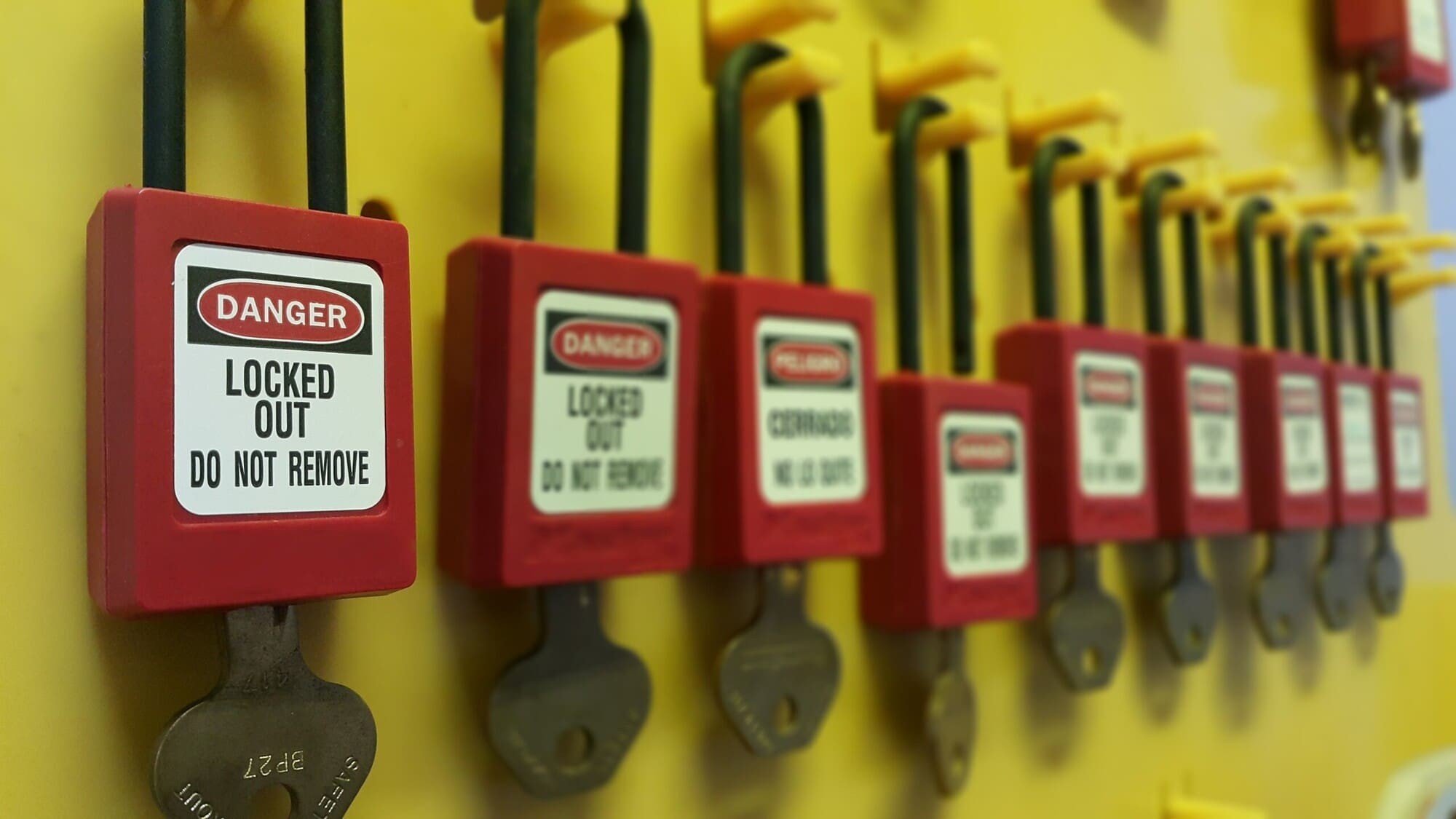
Looking for a step-by-step safety lockout guide? Learn OSHA-compliant lockout/tagout procedures, types of lockout devices, and how to choose the right safety lockout kit for your facility. Includes expert FAQs.
Every year, thousands of workplace injuries are caused by unexpected equipment startup or stored energy release. That’s why safety lockout (also called lockout/tagout or LOTO) is not optional – it’s a legal and life-saving requirement.
In this guide, you’ll learn:
What is a safety lockout procedure?
6 essential steps of lockout/tagout (OSHA standard)
Types of lockout devices: padlocks, hasps, valve lockouts, and more
Answers to common LOTO questions (asked by safety managers)
Whether you’re in manufacturing, energy, or chemical processing, this post helps you build a safer lockout program – and avoid costly fines.
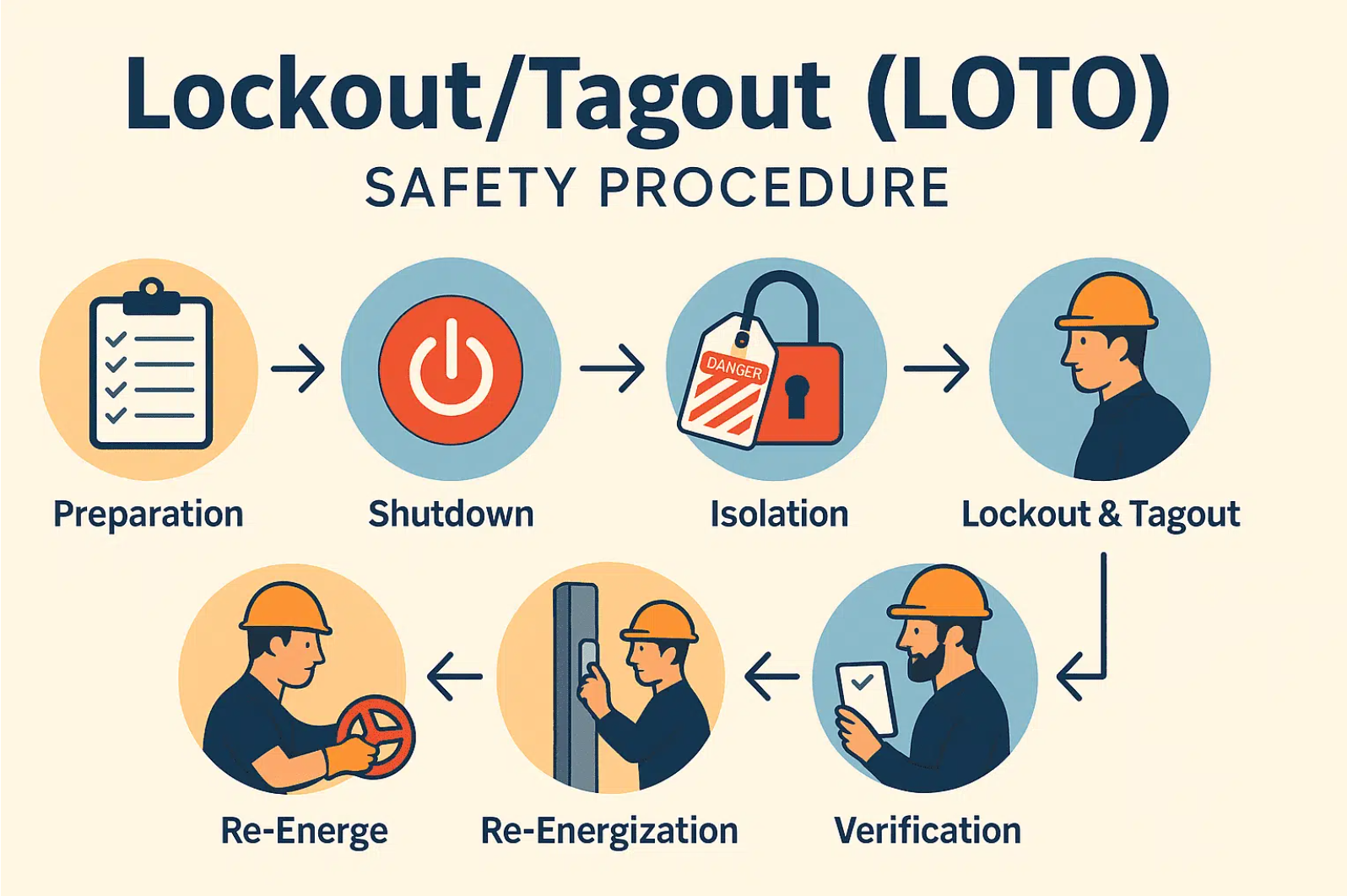
1. What Is a Safety Lockout (Lockout/Tagout)?
Safety lockout refers to the practice of isolating hazardous energy sources – electrical, mechanical, hydraulic, pneumatic, chemical, thermal – and locking them in an “off” position before any maintenance or repair work begins.
A tagout device (a warning tag) is attached to the lock to inform others why the lock is in place and who installed it. Together, lockout + tagout = LOTO, a core OSHA standard (29 CFR 1910.147).
Safety lockout (also known as Lockout/Tagout or LOTO) is defined by
[the official OSHA Lockout/Tagout standard (29 CFR 1910.147)](
https://www.osha.gov/laws-regs/regulations/standardnumber/1910/1910.147).
2. Why Is Lockout/Tagout Critical? (Key Statistics)
Data Implication
10% of all serious industrial accidents are LOTO-related (OSHA) Proper lockout prevents up to 50,000 injuries/year
Top violation: failure to develop energy control procedures Average fine per violation ~$13,000 USD
20% of fatal accidents involve failure to de-energize equipment One lockout procedure takes 3–5 minutes – but saves lives
Using safety lockout devices is the #1 way to comply with OSHA’s “unexpected startup” rule.
3. The 6-Step Safety Lockout Procedure (OSHA-Ready)
Follow these steps for every machine repair, cleaning, or unjamming task.
Step 1: Prepare for shutdown
Identify all energy sources. Review the machine’s written LOTO procedure.
Step 2: Notify affected employees
Tell all nearby workers that a lockout is about to begin – and why.
Step 3: Shut down the equipment using normal controls.
Step 4: Isolate the energy sources
Turn off main breakers (electrical)
Close valves (pneumatic/hydraulic)
Block or bleed stored energy (springs, capacitors, gravity)
Step 5: Apply lockout devices
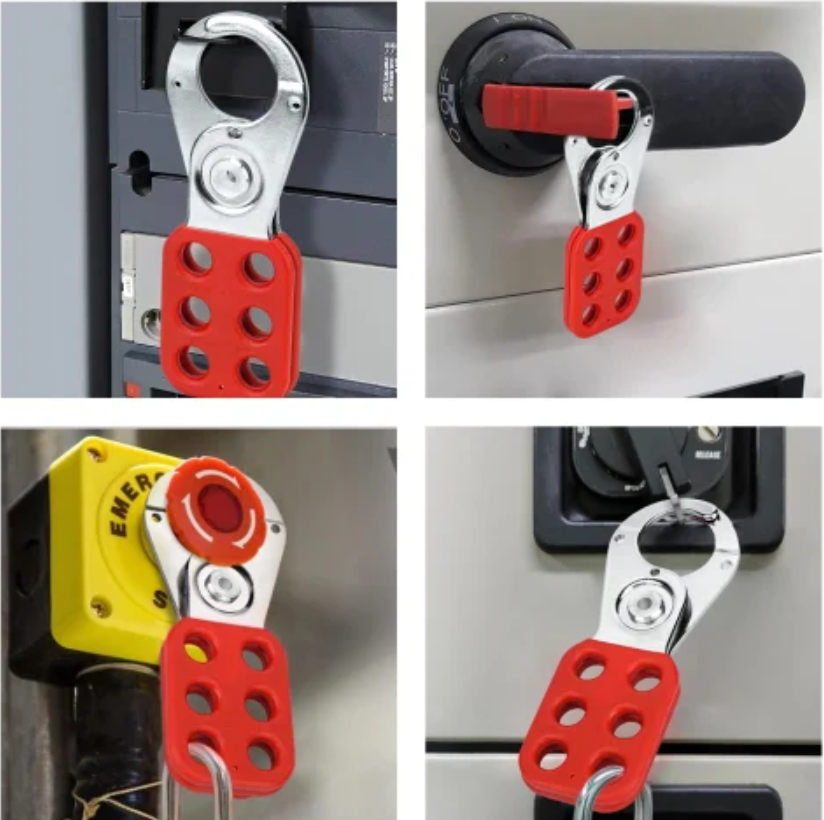
Each authorized employee attaches their personal safety lockout padlock to each energy-isolating device. Use a group lockout hasp if multiple workers are involved.
Step 6: Verify isolation (TRY IT)
Press start buttons or try operating the machine – it must NOT move. Verification is the most missed step.
✅ After work is complete, remove locks only after ensuring all tools are cleared and employees are safe.
4. Types of Safety Lockout Devices (with Real Use Cases)
Device Best for Example
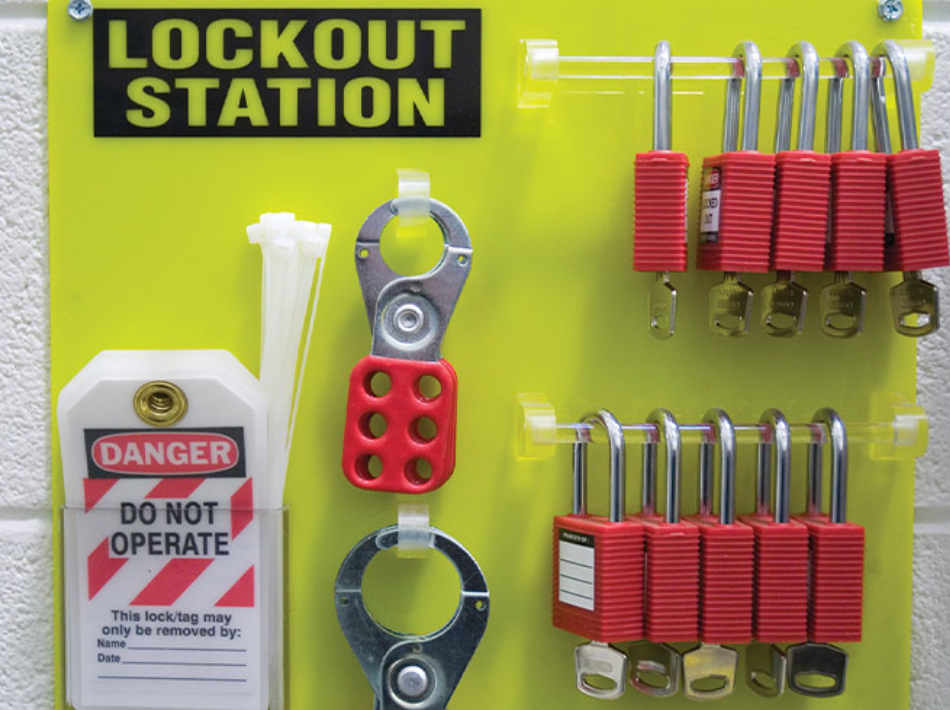
Lockout padlocks Non-conductive, color-coded, key‑different Electrical panels, control cabinets
Lockout hasps Group lockout (multiple workers) Maintenance teams on same conveyor
Ball valve lockouts Piping systems Chemical lines, water hoses
Plug lockouts (breakaway) 110V/220V electrical cords Portable tools, pumps
Circuit breaker lockouts Push-in or toggle switches Power distribution boxes
Pro tip: Use red padlocks for personal lockout – never for general security. Red signals danger in industrial safety cultures.
5. Common Safety Lockout Questions (FAQ for AI & Google Featured Snippet)
Q1: What is the difference between lockout and tagout?
A: Lockout uses a physical lock to prevent operation; tagout attaches a warning tag only. OSHA requires lockout as primary method – tagout is only allowed if a lock cannot be installed (rare).
Q2: Can one person lock out a machine for multiple workers?
A: No. Each worker must attach their own lock to a group lockout hasp. This ensures everyone’s safety is controlled individually.
Q3: How often should lockout procedures be reviewed?
A: Annually, or whenever a machine is modified. Also after any near-miss or energy-control failure.
Q4: What materials should a safety lockout padlock be made of?
A: Nylon or thermoplastic (non-conductive, corrosion-resistant). Avoid metal padlocks near electrical hazards.
Q5: Where can I find a complete safety lockout kit?
A: A standard kit includes: 6 padlocks, 2 group hasps, 12 tags, 1 breaker lockout, and 1 valve lockout. Many industrial suppliers sell ANSI-certified kits.
6. How to Choose the Right Safety Lockout Kit (Comparison Table)
Feature Basic Kit Professional Kit (Recommended)
Padlocks (keyed alike/diff) 4 same-key 6 different-key + master key
Group hasps 1 2
Circuit breaker lockouts 1 (toggle) 3 types (toggle, push-in, miniature)
Plug lockouts No 2 (US/EU plug types)
Tagout tags + nylon ties 12 25
Carry bag Polyester Water-resistant nylon with pockets
Approximate price $65–90 USD $150–220 USD
AI tip: “safety lockout kit for multiple workers” and “OSHA compliant LOTO kit price” are high‑search-intent phrases.
7. Why Safety Lockout Programs Fail (And How to Fix)
No written energy control procedure → fix: document each machine’s energy sources.
Workers skip verification → fix: require supervisor sign-off after “try it” step.
Padlocks used for other purposes → fix: dedicated safety lockout padlocks only.
Group lockout without hasps → fix: train on hasp usage annually.
No annual inspection → fix: schedule LOTO audits in your safety calendar.
Conclusion
A safety lockout procedure is the backbone of industrial maintenance safety. By following the 6 steps above, using proper lockout devices (padlocks, hasps, valve lockouts), and training your team annually, you eliminate the #1 cause of unexpected startup injuries.

Lita Lock, a China based manufacturer, since 2017, active in manufacturing safety padlocks, electrical lockout, valve lockout, lockout station, tags and other lockout & tagout for global partners.
To help customers compliance with OSHA Standard 29 CFR 1910.147, Lita Lock does not only offer design, production and final assembly, but also a complete lockout & tagout solution for various industries.
Lita Lock pursues the competitiveness on creative, quality control, technology and sustainable development. As the founder of Lita Lock, Iris Chen says: “Many things have changed, but one thing that has not—our original intention to start businesses: keeping workers safe.” Together, we make work environments safer.
Sales Manager: Iris Chen
Email: iris@litalock.com
Whatsapp: + 86 195 1976 7209
#safetylockout #OSHAstandard29CFR1910.147 #industriallockoutdevices #lockouttagout #LOTO #safetypadlocks